CRAM’s Satellite tracking page already lets visitors explore the real maps and see who supported each tag. Griselda-Pepita’s rescue and recovery are told in separate updates. This concept gives her a featured story on that same page and brings visitors back to the original tracker.
Where it would live
On CRAM’s existing Research and Conservation → Satellite tracking page, above the list of tracked turtles. Release news, social posts and council updates could link directly to her story.
Campaign objectives
Awareness: help visitors understand what goes into sea turtle rescue and rehabilitation, and what tagging reveals after release. Donations: give people who connect with Griselda-Pepita’s story a direct way to support care for more turtles.
How to measure it
For awareness, track story completion and tracker opens, then check understanding in a short visitor test. For donations, track clicks to CRAM’s donation page and, if CRAM can share aggregate figures, completed gifts attributed to the case-study link. Compare rates with the existing page where comparable data exists.
Adult female loggerhead · Caretta caretta
Griselda-Pepita’s story
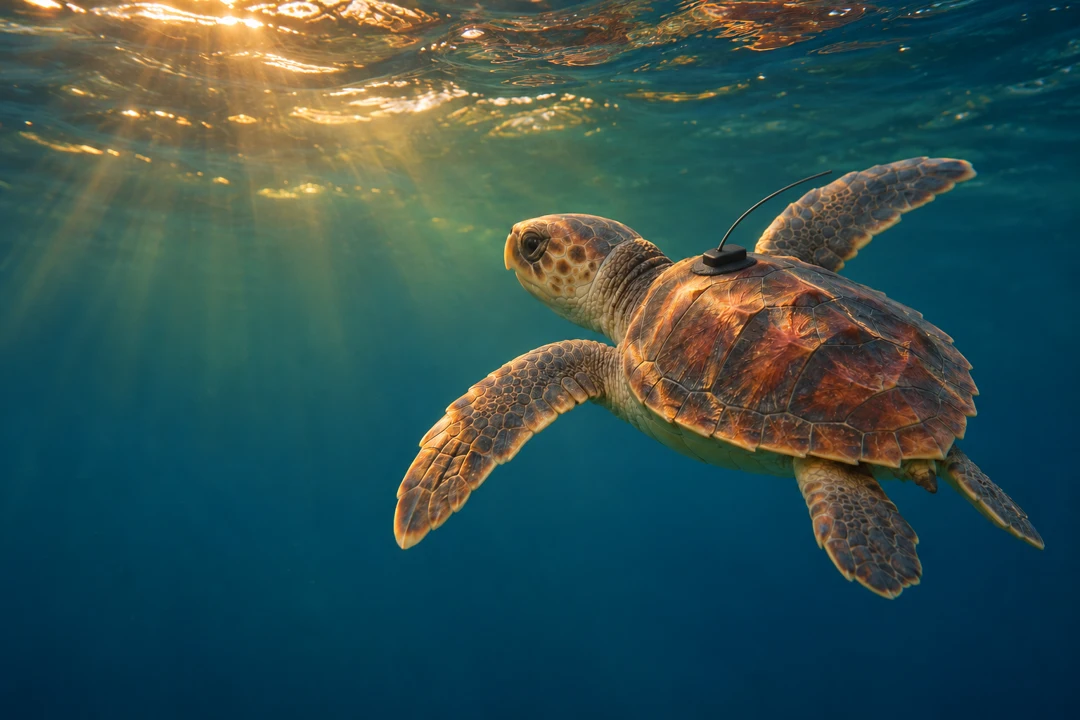
When a fishing crew brought her in, she weighed 43 kg and could barely move her hind flippers. A year later she was back at sea. The care in between made that journey possible.
A fishing crew calls for help
The San José I crew caught her accidentally off the Catalan coast. At CRAM, X-rays and a CT scan showed an old shell fracture reaching her spine and affecting her spinal cord.
One year in care
Healing a broken shell
CRAM’s team cleaned and dressed the wound to support healing and keep water out. In intensive care she received regular wound care, daily food and a clean tank. She began eating again on her third day.
Released with a satellite tag
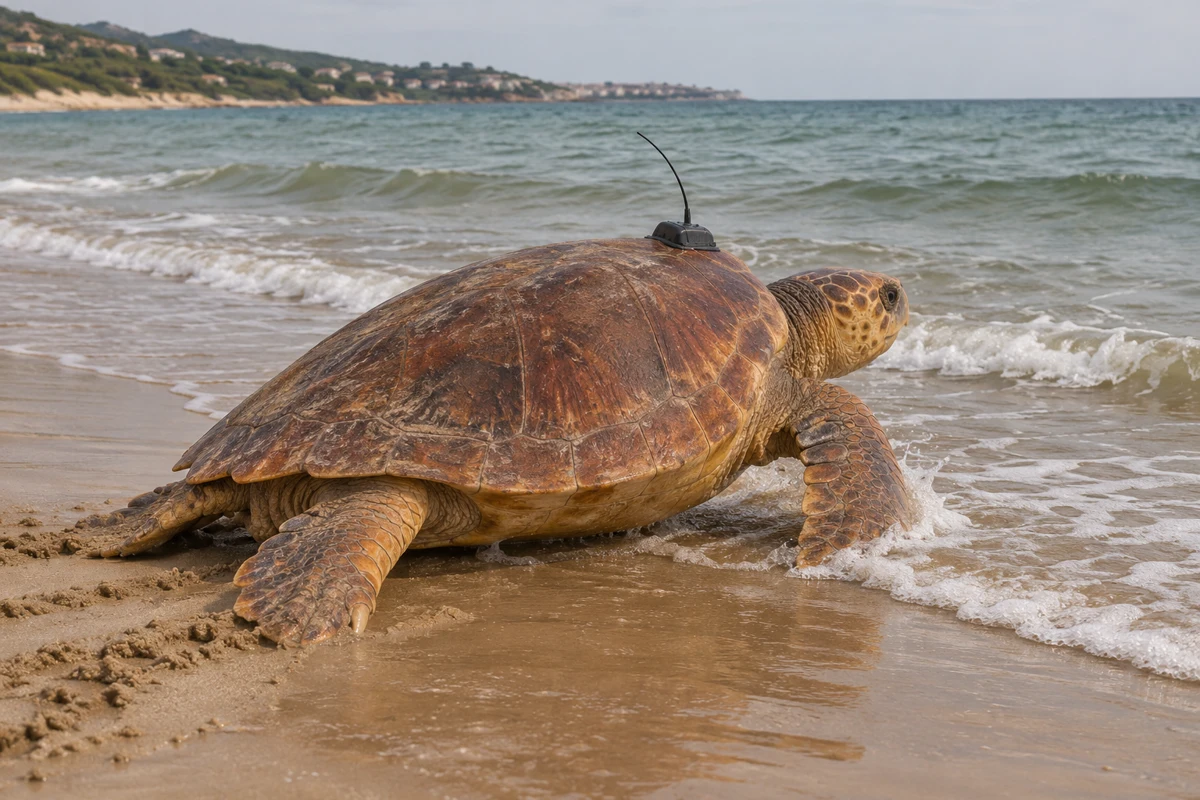
After a year of rehabilitation, she returned to the sea. El Prat de Llobregat City Council supported the tag that lets CRAM follow her movements after release.
Illustrated reconstruction of the release. Griselda-Pepita returned to the sea on 22 September 2025.
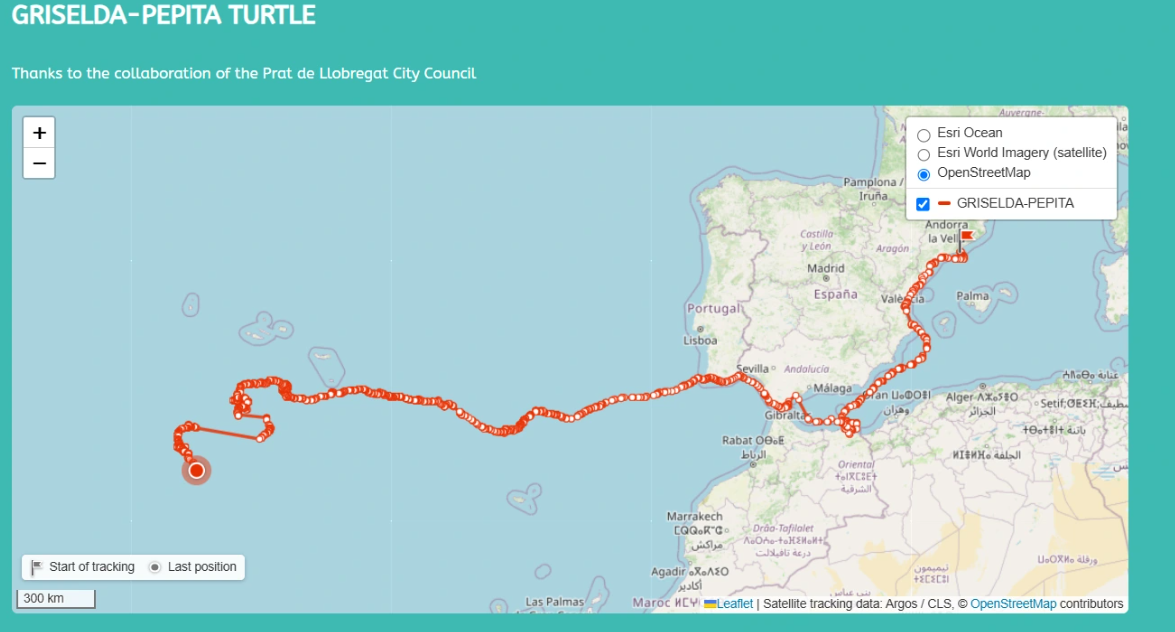
From the Mediterranean to the Azores
CRAM reported her in the Gulf of Cádiz after she crossed Gibraltar, about two months after release. By 25 February 2026, El Prat City Council reported that she had reached the Azores, roughly five months after her release. The update gives no exact arrival date.
Roughly how far did Griselda-Pepita travel along the route shown?
Pick a distance to check your guess.
Help more turtles get back to sea
Before Griselda-Pepita could cross an ocean, she spent a year in the care of people who helped her swim again. Your donation helps them do it all over again.